Category: Archive

  • The Good Friday Fire of March 21, 1788

    The Good Friday Fire of March 21, 1788

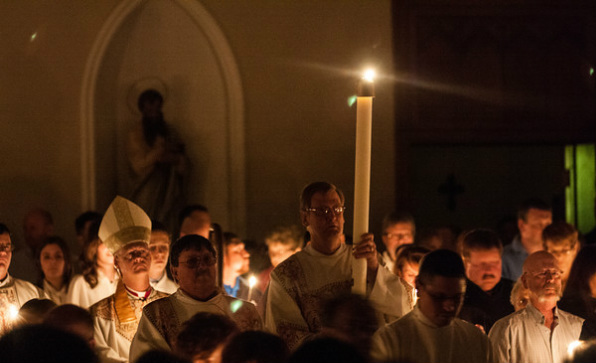
    Fire is a powerful symbol at our liturgical celebrations of the Great Easter Vigil.  It reminds us of the Light of Christ and the power of the Holy Spirit.  Fire can be a wonderful asset to our way of life, and it also has the power to consume and destroy anything in its path when it is out of control.

    It was Good Friday, March 21, 1788 when a fire ripped through New Orleans destroying 856 of the 1,100 structures in the city.  (An additional 212 buildings were destroyed by a city-wide fire just six years later on December 8, 1794.  Two hurricanes also contributed to the devastation during this time as well.)


    The website, http://www.frenchquarter.com/history/elements.php, presents this fascinating detail regarding the Good Friday fire of 1788.  “Through it all the Ursuline nuns in their convent on Chartres Street had prayed to Notre Dame de Bon Secours, Our Lady of Prompt Succor, patron of Rouen, their home town. As the fire had neared the convent on that Good Friday, the wind changed suddenly. (As Providence would no doubt have it, the front arrived from the north just in time.) The convent survived, and is still here with us.”

    Is it coincidence that the front arrived just in time, or is that the power of prayer?  Obviously, people of faith will view it one way while others may see it as the simple cycle of nature.  In my opinion it is simply amazing how many times throughout history we have seen particular structures spared from ruin because of fires, tornadoes, hurricanes, floods, earthquakes, and other phenomena while everything else around it is consumed in the disaster.  The sparing of the Ursuline convent is one of those events which can make us pause and reflect. 

    Each of us will experience hardships in life.  Through these difficult moments are we still able to see the presence of God?  Let us pray today for all who are hurting because of illness or injury, financial hardships due to unemployment or other financial difficulty, broken relationships, or the death of a loved one.  As we continue with our journey of Lent and officially enter into the season of Spring, may we experience NEW LIFE IN CHRIST!

  • Retreat at St. Anthony’s in Casper

    The grotto outside of St. Anthony’s Church in Casper provided an ideal setting for a photo to coincide with a specific topic covered during the day of retreat on Saturday, March 15.  During the retreat I shared a story about a TV show years ago with George Burns and Gracie Allen.  Although I do not recall the show, the story I heard was about Gracie calling a repairman to come to her house to fix a clock.  The repairman came, looked at the clock, and proceeded to explain to Gracie that the clock was fine.  She just didn’t have it plugged in to the electrical socket.  Gracie said she was aware of that.  She was trying to save electricity so she only plugged the clock in when she wanted to know what time it was.  I intentionally kept the transformer in this photo (upper left hand corner) to remind us to always stay plugged into God.  If we only call upon God when we need something, we are missing the opportunity to truly be in relationship!


    It was a fantastic weekend at St. Anthony’s.  The hospitality extended by the pastor was first rate, and getting to spend all day on Saturday with over 50 parishioners for the retreat was uplifting and renewing.  Preaching at all four of the weekend liturgies was also a very special priviege for me.  I hope that each of you experience abundant blessings during the remainder of this Lenten season.

  • Jesus Looked at Him and Loved Him

    In chapter 10 of Mark’s Gospel Jesus is having a discussion with a rich young man.  In verses 21 and 22 it says, “Jesus looked at him, loved him, and said to him, ‘You are lacking in one thing.  Go, sell what you have, and give to the poor and you will have treasure in heaven; then come, follow me.’  At that statement his face fell, and he went away sad, for he had many possessions.” 

    I often wonder what happened to the young man.  As he got older did he eventually accept the invitation?  I ask this question because I assume he spent some time in reflection after he walked away from Jesus.  The young man admitted to having observed all the commandments from his youth so he apparently had a desire to do what was right.  Would this one additional challenge keep him from growing any further in his journey toward holiness?

    “Jesus looked at him and loved him.”  I can only imagine the impact of receiving such a profound glance from the Savior.  The penetrating eyes of Jesus must have surely struck at the depths of the young man’s heart.  Would that look eventually bring him back?

    Scripture demonstrates a variety of responses from people who received a prominent glance of love from our Lord.  This young man walked away.  Judas Iscariot experienced deep despair and went out and hanged himself.  Peter accepted the look of Jesus, proclaimed his love three times, and became the “Rock” upon which the Church was built.  Thus, when Jesus looks at us and loves us, we each have the free will to respond in our own unique way.  We may experience this look in our prayer life, our worship, our joys, and in our pains and hurts as well.  How often do we miss this look of love?  In those times when we capture the look and experience the impact deep within our being, how do we respond? 

    Knowing we are loved by God to such depths should fill our hearts with joy.  Let us live as people of hope!

  • The Journey of Lent

    We are only a week into Lent, but it has already been quite a journey.  I had the opportunity last week to serve as the spiritual adviser for a men’s Cursillo weekend held in Cheyenne.  It was the first Cursillo weekend to be held in the diocese in about ten years.  It began Thursday evening and ended late on Sunday afternoon.  Candidates came from as far north as St. Stephen’s Mission and as far south as Denver.  It was exciting to see the transformation of the group throughout the course of the weekend.  It is a blessing to have these new Cursillistas in our midst.

    I have spent the early part of the week catching up on all of the administrative duties that seem to accumulate rapidly any time I am out of the office for a couple of days.  Now it is time to prepare for the next leg of the journey which takes place this weekend.  I will be heading to St. Anthony’s Parish in Casper for a day-long retreat on Saturday, and the pastor has graciously invited me to preach at all of the weekend liturgies while I am there as well.  I have had the privilege of doing this twice before, in Advent and Lent in 2013, and I am looking forward to spending this time once again with the parishioners at St. Anthony’s Parish.

    The season of Lent is always a busy time, but it provides a magnificent chance to grow in our relationship with the Lord.  I encourage each of you to take advantage of those extra opportunities in your local parish to pray, study, and perform acts of service during this holy season.  Please do not let these forty days pass by without encountering the living God in a profound way.  Just as the father lovingly embraced the prodigal son upon his return, God the Father is always ready to welcome us into His loving arms.

    If your Lent has gotten off to a slow start, or if you have already failed to keep some of your Lenten resolutions, now is the time to begin anew.  We will hear the account of the Transfiguration this weekend.  Jesus “touched” his disciples to alleviate their fears at this brilliant spectacle.  Jesus longs to “touch” each of us with His love, compassion, and mercy.  Let us find strength in the Lord, our God!

  • Parish Mission in Green River, Wyoming

    Parish Mission in Green River, Wyoming

    Immaculate Conception Parish Green River, Wyoming

    It was a marvelous four days (February 22-25) at Immaculate Conception Parish in Green River, Wyoming.  I had the privilege of preaching at the weekend Masses and then presenting a three night parish mission entitled, “Stir Into Flame the Gift of God.”  The hospitality extended to me was simply amazing, and I am grateful for the kindness and generosity of the pastor, staff, and parishioners.

    On the first night of the mission we focused our attentionon faith.  What do we believe?  Why do we believe it?  How does it make a difference in the way we live? 

    The second night we reflected upon the gift of hope.  In particular, we examined our prayer lives and how that factored into our conversion experience.  Can people truly see that we are people of hope by the way we live?

    The final night of the mission was nothing short of powerful.  We pondered the wonderful attributes of our God in regard to mercy, forgiveness, and healing.  We took a serious look at our individual hurts and wounds and sought the peace, healing, and contentment that can only be found in the loving arms of our Redeemer.  The gift of tears was prevalent and the Holy Spirit moved within our midst in dramatic fashion.

    I am humbled each time I have the opportunity to be part of such a wonderful experience.  God’s people in Green River blessed me abundantly in my short stay in their community, and I am sincerely appreciative of the pastor’s invitation to be part of this precious experience.  

    Next up–the Rite of Christian Initiation of Adults (RCIA) retreat in Cheyenne tomorrow morning.  This is an annual retreat for all of those individuals at the three parishes in Cheyenne preparing to come into full communion of the Church at the Easter Vigil.  I enjoy the enthusiasm and anticipation that is present at this retreat each year.

    Following the retreat I will be preaching at three Masses at the Cathedral of St. Mary this weekend: Saturday evening at 5:15 P.M. and Sunday morning at 7:30 and 9:00 A.M.  

    Ash Wednesday then comes upon us with the beginning of Lent.  On Thursday, we are reviving the Cursillo movement in the Diocese of Cheyenne with a men’s weekend.  I have the awesome privilege of serving as a spiritual advisor for the weekend (March 6 through March 9) and I am looking forward to seeing the Holy Spirit move within our midst during these four days as well.

    Finally, the Rite of Election takes places at the Cathedral on Sunday, March 9, at 3:00 P.M.  After that, I may need a day off. 

    Have a Blessed Lenten Season!

  • President’s Day Weekend

    As we approach another celebration of “President’s Day” on Monday I can’t help but wonder what President Washington, President Lincoln, and all of our Founding Fathers would think about the current state of affairs in our country.  It is evident that Christianity in Colonial America served as the foundation of everything the early settlers set out to do. The collapse of Christian virtues and values in our modern culture shows just how far we have strayed from the original intent of our country’s founding.

    The Rhode Island Charter of 1683 begins, “We submit our person, lives, and estates unto our Lord Jesus Christ, the King of kings, and Lord of lords, and to all those perfect and most absolute laws of His given us in His Holy Word.”  Fast forward nearly 100 years to 1779 and look at what Samuel Adams wrote in a letter to James Warren.  “A general dissolution of principles and manners will more surely overthrow the liberties of America than the whole force of the common enemy.  While the people are virtuous they cannot be subdued; but when once they lose their virtue, they will be ready to surrender their liberties to the first external or internal invader.  How necessary then is it for those who are determined to transmit the blessings of liberty as a fair inheritance to posterity, to associate on public principles in support of public virtue.”  It seems that Samuel Adams had in mind in 1779 what we would witness in our current generation.

    Noah Webster (1758-1843) published a textbook in 1832 entitled, History of the United States.  In this book he speaks at length about the value of religion, the Bible, and Christian principles.  One line serves as a prominent reminder to all public servants today.  “Almost all the civil liberty now enjoyed in the world owes its origins to the principles of the Christian religion.”  Compare that statement to the reality of today in which there appears to be an all-out assault on Christianity from the powers that be.  How did we as a nation allow ourselves to be led astray from such convictions?

    The moral decline of our nation is evident.  The refusal to believe in Eternal Truth has brought about rampant relativism in which each individual creates his/her own truth.  The consequences of such a belief system seems to  become more and more obvious with each passing day.  We have been legally killing unborn children for 41 years; there are times when this includes infanticide as depicted in testimony at the trial of Dr. Gosnell.  Physician assisted suicide and euthanasia clearly establish that the value of life is determined by functionality.  The dignity and sanctity of human life is ignored in each of these actions, and yet, it has become accepted and even welcomed in contemporary culture.

    The attack on Christianity is to be expected.  People with religious convictions who are guided by the Sacred Scriptures in their day-to-day lives are a roadblock to those with an evil agenda.  The tyranny that erupted at various times in history provides us with some insight as to what is happening today.  If we are prudent we will all become students of history to get a glimpse at our future.  The removal of God from our public institutions, the indoctrination of students from preschool through the ultra-liberal university years, the control of the press from graduates of these liberal universities, and big time financial donors promoting their aggressive agenda paints a picture that is not too bright for Christians who value the liberty provided by the Constitution of the United States.

    The Health and Human Services (HHS) mandate is one of the latest assaults on Christianity, and on the Catholic Church in particular.  Why is this relevant?  The Catholic Church is a significant roadblock to those who pursue a culture of death.  A book entitled, They Fired the First Shot 2012, spells it out quite clearly beginning on page 562 where the author says:

    “If you study communist takeovers and dictatorships, you will see we are on this road.  Mexico’s history in the early part of the last century is proof.  As in Mexico, the Catholic bishops, priests and religious in the United States will be among the first to be imprisoned or killed.  Others will follow.  The healthcare mandate first attacks the Catholic Church.  Bishops, as the enemy sees them, are generals to be eradicated to scatter the flock and are the first that must be taken down.  Don’t want to believe it?  Study history.  Look at the French Revolution.  The guillotines ran non-stop.  Not possible in the United States?  If there is not a radical stand now, “the guillotines,” whatever that might be in the USA, will run non-stop.  History clearly shows religion is first in line to be crushed and the first major blow to smash the Church is the healthcare mandate.” 

    The author is adamant that the Catholic Church has to be firm in standing up against this attack on religious liberty.  The writer goes on to elaborate that, “twenty-five percent of all medical health related care, totaling $100 billion, is under the spiritual authority and protection of the Catholic Church.  This in itself is authority not to bargain with, but to mandate; not to request with, but to state: ‘Our goal is we will not shut down.  We will not relinquish our authority to the state.  We will not go to jail.’”

    It appears that we will need to follow the example of repentance as demonstrated by the people of Nineveh to bring our nation back to God.  Prayer and fasting are key elements that people of God have used in the past and they are certainly pertinent for our needs today.  May each of us truly turn our hearts and minds to God!  

    The words attributed to Patrick Henry so long ago may resonate once more with Americans, “Give me liberty, or give me death.”  

  • World Day of the Sick

    In 1992, Pope John Paul II designated February 11, as World Day of the Sick.  The Church also celebrates the Memorial of Our Lady of Lourdes on this day.  Obviously, these two events have much in common when we consider the many miraculous healings that have been recorded at the shrine in Lourdes.  This is certainly a time to reflect and pray for all those who suffer and struggle with illness, but it is also a time to give thanks and praise for the many blessings that have been bestowed upon us through medical progress as well as those supernatural occurrences of healing.

    “Why do bad things happen to good people?”  This is a question that has been pondered in one way or another for centuries.  The philosophical and theological extrapolations on the topic are immense, and the psychological and sociological components add an even more complex twist to decipher the meaning of life in the context of suffering.  It was for more than a decade that I worked with a support group for individuals and families coping with a life threatening illness. The question was posed many times in one capacity or another, “Why is God doing this to me (or my loved one)?”  

    I became a student of suffering by necessity, not by choice.  Being diagnosed with cancer at the age of 25 provided an opportunity to learn some things I would have never learned in textbooks alone.  The awareness of my mortality at such an early age shaped my adult life in a way that I could have never imagined.  There was a cycle of fear, anger, bitterness, resentment toward healthy people, and a whole list of other emotions that I need not elucidate.  Suffice it to say that it took quite a while for me to come around to seeing anything positive in this experience we call suffering.

    I remember being in the hospital and looking out the window at the rest of civilization with contempt.  I could see the Missouri River flowing by and I felt that was a depiction of my life.  Life was flowing by and I was not in control of where I was going.  I watched the people walking by on the sidewalk and was enraged at their lack of concern for my well-being.  It was incomprehensible as to how life outside the hospital walls could keep going on without me.  To put it mildly, I did not take up my cross willingly.

    More than half of my life has now been lived as a cancer survivor.  One of the greatest gifts that I finally received through this experience was the virtue of empathy.  I know what it is to hurt, to suffer.  It has enhanced my personal life and it clearly has affected the way I minister to others who are hurting.  This is not the path of learning that I would have chosen for myself, but I am convinced that it is a path allowed by God in my journey toward understanding, and hopefully, holiness.  The learning did not come quickly or easily, but it continues to grow deeper with the passing of years.

    In the last quarter of a century I have had the privilege to enter into relationships with many individuals and families coping with serious illnesses.  Some have recovered, some have succumbed to the battle, and others are still maintaining the fight.  The one thing that each relationship has demonstrated to me is that these are sacred moments.  There is an opportunity to encounter God in the midst of the pain and suffering.  It may not always be easy to recognize those opportunities when one is in the midst of the challenges, but they are present nonetheless.

    Although World Day of the Sick may focus our attention on physical suffering, it does not diminish the fact that many people are suffering from mental, emotional and spiritual ailments as well.  Broken relationships between spouses have brought an abundance of suffering to innumerable homes, and the ripple effect is detrimental to the lives of a multitude of children who bear the burden of this rampant discord in our culture.  The economic downturn and subsequent job losses has affected a large percentage of households and caused serious mental and emotional anxiety.  There simply is no shortage of pain and suffering in contemporary society.

    If you are currently in the midst of serious suffering and pain right now, I hope you find strength in knowing that the Church is praying for you in a very significant way on this Memorial of Our Lady of Lourdes.  For you and your loved ones I simply offer this prayer from the Rite of the Anointing of the Sick.

    “God of compassion, you take every family under your care and know our physical and spiritual needs.  Transform our weakness by the strength of your grace and confirm us in your covenant so that we may grow in faith and love.  We ask this through our Lord Jesus Christ, your Son, who lives and reigns with you and the Holy Spirit, one God, for ever and ever.  Amen.”

  • The Award Goes To…..Nancy Pelosi

    What is an award?  According to the dictionary, when the word award is used as a verb it means, “To give as due or merited; assign or bestow.” 

    This made me start thinking about my school years when awards seemed to be a bit easier to achieve than what they are as an adult.  In elementary school I could get an award for just showing up.  It was called “perfect attendance.”  In high school I could play sports and sit on the bench much of the time and still get a “letter” for my efforts.  There were academic opportunities for awards as well.  Getting an award for “most improved” seemed like a positive thing until I realized it could simply mean that I was really awful at this endeavor in the beginning and I am probably still not too good at it now.

    As a teacher, I didn’t give many awards to my students.  If you received an award from me it was something you earned.  However, the reality of frivolous awards hit home with me when I became the principal of an elementary school.  The awards assembly was long and tedious and I cringed at the notion that every student was going home with numerous awards.  It seemed to be an exercise in futility.  What real value did these awards have if the discipline and hard work to achieve them was minimal at best?     

    Did you have awards in high school for graduating seniors beyond valedictorian, salutatorian, and National Honor Society?  Were there categories such as “most likely to succeed” or “most athletic” or any other such type of depiction?  Were there unofficial categories created by the students outside the mainstream such as “teacher’s pet” or even a little more brash such as “most likely to end up in jail”?  I vividly remember that there were certain awards a person just didn’t want to win, officially or unofficially.

    In our adult lives awards sometimes come in pay raises or job promotions.  Other times we actually receive specific awards for our achievements.  There may not be too many of us that receive a Nobel Prize, but there are other distinguishing awards in our careers that may attract our attention.  As I was reading an article today it struck me that politicians seem to have a plethora of awards given to them from a variety of organizations.  Do they earn them or is this just another means of individuals scratching each other’s back in a mutual admiration society?

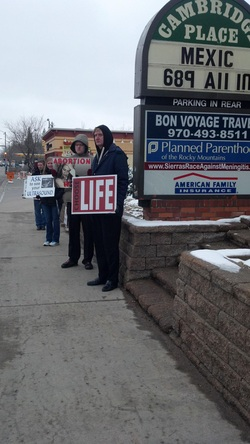
    Unfortunately, the article that caught my attention today referred to an award which I simply cannot comprehend.  It is the Margaret Sanger Award.  Why would an award be presented to someone for actively trying to eliminate a segment of our population?  Cecile Richards, President of Planned Parenthood Federation of America said, “On behalf of Planned Parenthood and the millions of patients we serve each year, it gives me great pleasure to announce that House Democratic Leader Nancy Pelosi will receive the Planned Parenthood Federation of America Margaret Sanger Award, our highest recognition of leadership, excellence, and outstanding contributions to the reproductive health and rights movement.”

    It is no surprise that Nancy Pelosi would be given such an award because her commitment to the pro-abortion movement is thoroughly documented.  Remember, she referred to the availability of late-term abortions to be “sacred ground” for her.  Subsequently, this will be an award Nancy Pelosi will likely cherish with deep devotion.  It would be my hope that she would distance herself from receiving such an award, but her track record reveals that this is probably an unrealistic wish rather than a true hope. Planned Parenthood’s “Annual Gala” will take place on March 27, in Washington, D.C. at which time Nancy Pelosi will deliver her remarks and accept the award.

    The words “leadership, excellence, and outstanding contributions” apparently have different meanings for different folks.  It saddens my heart to see these words used to describe the pro-abortion actions of Nancy Pelosi.  Knowing that this atrocity (award presentation) is taking place during the holy season of Lent, it presents an opportunity for a renewed vigor among pro-life individuals to engage in serious “prayer, fasting, and almsgiving.”  Let us demonstrate our “leadership, excellence, and outstanding contributions” in creating a culture of life!

  • Bloody Sunday 1972

    On January 30, 1972 in Londonderry, Northern Ireland, demonstrators were marching in protest of the British policy of internment of suspected Irish nationalists.  The British authorities had ordered the march banned, but it continued despite the orders.  There are numerous accounts which give details of the incident of that day, but these reports don’t seem to all agree about certain aspects of the confrontation.  Bottom line, British Army paratroopers fired into the crowd killing 13 and wounding at least that many as well. All of the deceased were Catholics.  This event came to be known as Bloody Sunday.

    I was only an adolescent when Bloody Sunday occurred, but I can remember watching the evening news with my parents during that time period and frequently hearing stories about the clashes between Protestants and Catholics.  I did not fully comprehend what was taking place, but even at that early age it was obvious that the tension and conflict was immense.  Looking back, I recall that the Irish Republican Army (IRA) became a household name through the repeated reporting night after night.  Although I lacked understanding about the events, I certainly had a familiarity with them nonetheless.

    Conflict is evident throughout human history and it remains prevalent in modern society as well.  Nations wage war against one another; revolutions occur within countries; religious factions attack and divide; the list could go on and on.  Following the State of the Union speech this week given by the president of the United States, we can easily spot the conflict between political and moral ideologies right here at home.  The gap between conservative and liberal thinking grows ever wider and the increased polarization of our citizenry is the ensuing result.  This trend has accelerated in recent decades and it appears to be a recipe for disastrous results.  If we believe that a house divided against itself cannot stand, where do we think our nation is headed?

    Is there hope?  Reading through the Old Testament we can see the “ups and downs” that nations experienced.  If the people went astray but finally turned back toward God, they would flourish. The good news is that if we turn back to God anything can happen.  I remain hopeful that someday here in the United States we will allow God back into our public institutions and into our society.  I am hopeful that there will come a day when we awake from our spiritual slumber and live devout and upright lives.  What can we learn from events like “Bloody Sunday?” 

    “The people in darkness have seen a great light.”

  • Teaching The Fullness of Faith

    How is the Catholic faith effectively handed on from one generation to the next?  Many educators and faith formation coordinators have lamented in recent decades that we have not done a good job in evangelizing and catechizing our people.  Thus, it is frequently perceived that our current Catholic population lacks a thorough knowledge and understanding of Church teachings.  Is that perception accurate?

    On January 24, 2014, Michael Voris posted a video reflecting on some things he observed at the pro-life march in Washington, D.C.   http://www.churchmilitant.tv/daily/?today=2014-01-24

    He commented about the impressive aspect of seeing so many young people braving the bitter cold to participate in the march, but he conducted some unscientific interviews with many of them while he was there and walked away with some disturbing statistics.  He found that 30% of the young people gathered for the march were okay with the use of contraception.  He also found that 19% of the young people were accepting of homosexual physically active relationships.  In his observation, Michael Voris points out that the culture of death has already slipped into the hearts and minds of the young Church.  Remember, these observations were made in regard to those young “pro-life” people present at the March for Life in Washington, D.C.  What do you think these interviews would unmask if they were conducted in a completely different venue?

    Michael Voris is very direct in addressing Church leadership about their shortcomings and failures in regard to preaching and teaching the fullness of the faith, and he readily acknowledges that being the messenger of such news does not make him popular in certain circles.  I will admit that his criticisms are difficult to hear since I fall into one of the categories on the receiving end of the message.  However, it is essential for all of us, clergy and laity, who have teaching responsibilities within the Church to take our roles seriously.  Subsequently, I believe Mr. Voris gives us an opportunity for some solid evaluation and reflection of our ministerial outreach.

    How do we a draw a balance in our preaching and teaching?  Is there a way to not focus on “fire and brimstone” constantly, and yet truly teach the more difficult components of the faith?  Quite simply, how do we teach the truth in love?  What can we learn from the past, and how can we apply it to the present?

    Cicero (106 B.C. – 43 B.C.) listed three aims of rhetoric: (1) to teach; (2) to delight; and (3) to persuade.  St. Augustine picked up on this from Cicero and reinforced the importance of clarity in our communication.  He applied this to both teaching and preaching.  His admonishment was straight to the point when he said, “The speaker should not primarily consider the quality of his teaching, but the clarity of it.”  (On Christian Doctrine 4, 12, 27)

    Obviously, we are pursuing goals much more prolific than the simple development of oratorical skills.  However, it makes sense to utilize the concepts of effective rhetoric in our teaching and preaching.  In what ways do we strive to “delight the heart?”  If our approach to teaching is vibrant and engaging we have the potential to create an atmosphere more conducive to learning.  It is no secret that if we delight the heart, the mind becomes more receptive to our teaching.  Ultimately, this receptivity, or lack thereof, impacts our ability to persuade the hearer as we invite him/her to conversion.  God chooses to use us as instruments of His love; it is important that we cooperate with the grace of our Lord Jesus Christ and the fellowship of the Holy Spirit as we minster. 

    Continuing our celebration of Catholic Schools Week encourages all of us with teaching responsibilities in our schools (and other settings as well) to engage in some serious reflection.  How do I engage in prayer and study in my own life?  Am I on fire with the love of God?  Why did I enter this ministry?  Am I pursuing my passion or my pension?  Finally, am I effectively contributing to the building up of the Kingdom of God?

    “Catholic Schools: Communities of Faith, Knowledge, and Service”