The clergy of the Diocese of Cheyenne will be gathered for their annual institute from Tuesday through Thursday. This is a time for business meetings, some professional development and learning, and of course, a time for prayer. We are blessed to have these opportunities to continue our formation and learning, as well as spend time with one another from all across the state. Please keep us in your prayers during these days that we may grow in wisdom and grace. A prayer for safe travel is always welcome as well.
Author: Vernon Dobelmann
-
Happy Birthday Dolly Parton
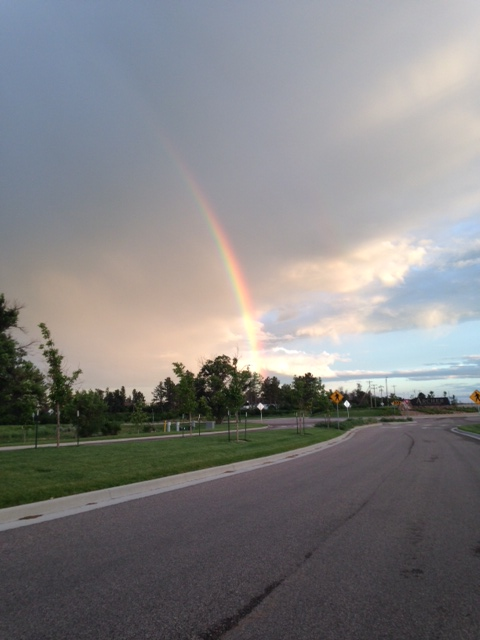
Dolly Parton was born on January 19, 1946. A quote attributed to her is this: “The way I see it, if you want the rainbow, you gotta put up with the rain.”
If you are walking through a stormy and difficult time in your life, I want to encourage you to look for the rainbow. God is present in the midst of our sorrow and pain. The sun will shine again.
-
Week of Prayer for Christian Unity
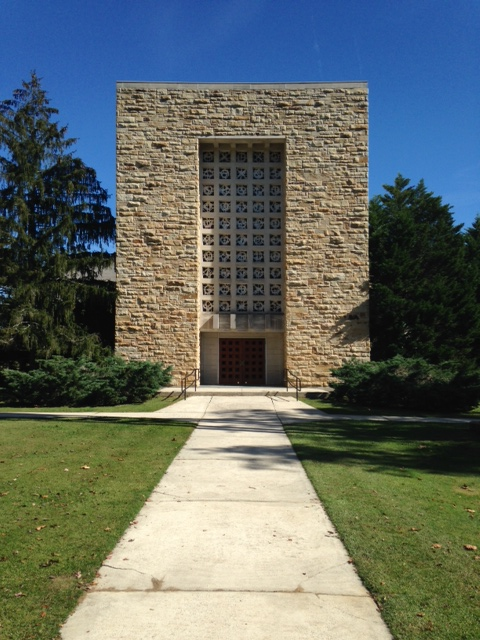
I had the pleasure of visiting the St. Bernard Abbey Church in Cullman, Alabama this past October. The outside of the building appears to be quite plain, but the inside certainly prompted me to lift my heart and mind to God. Visiting sacred spaces like this is a priority when I travel. I continue to be amazed at the creativity of people who have designed and built so many of our beautiful churches.
How do we take the beauty of what we experience within the church walls out to the wider community? How do we serve as missionaries in our own towns and cities? How do we get along with people of other Christian denominations? How do we embrace the words of Jesus, “that all of them may be one Father?” (John 17:21)
Each year we celebrate the Week of Prayer for Christian Unity from January 18 through January 25. Do we take this endeavor seriously? What is the point of having such a week? Does anyone really care?
If we take the Scriptures seriously we will take Christian unity seriously. Jesus never said, “Oh Father, give me 30,000 different denominations so we can experience disunity in all its splendor.” He did say that, “there shall be one flock, one shepherd.” (John 10:16)
Let us renew our commitment to pray and work for unity among all Christian believers–not just this week–but each and every day of our lives.
By this all people will know that you are my disciples, if you have love for one another.
John 13:35 -
We Know Not The Day
It was the second time in three months that our local community experienced the tragic deaths of more than one individual from a family. Last fall a car accident claimed the lives of three individuals in one car. This time it was a father and son killed in a snowmobiling accident. That funeral took place this morning.
As I stood and looked at the two caskets, I couldn’t even imagine the level of grief being experienced by the family. Mom and dad lost their young son as well as their 8 year old grandson. In an instant their lives were forever changed.
The precious gift of life is not something to take for granted. Pause for a moment to pray for your loved ones. Then, be sure to tell them how much they mean to you. Don’t assume that those close to you know that you love them. Take the time to tell them and to show them just how much you care.
-
It Is Time To Pray
The anniversary of the 1973 U.S. Supreme Court decision of Roe versus Wade is this coming Thursday. The need for prayer and sacrifice remains great. It is my hope that we all get involved in some way to support a culture of life and bring healing to our land.
The United States Conference of Catholic Bishops has a plan for prayer in the upcoming days starting tomorrow. Nine Days for Life will be an opportunity for us to pray for a deeper respect for life from conception through natural death. This novena of prayer runs from January 17 through January 25. You can find information and resources on the USCCB website.
I know that many in the St. Louis area make the trek to Washington, D.C. each year. Here in Wyoming we have a significant group from the Wyoming Catholic College making the trek to the West Coast Walk in California. Of course, we have a march to the state capitol right here in Cheyenne as well. Wherever you are, please get involved. Most of all, continue to pray the we as a nation come to understand the dignity and value of each human life. Being made in the image and likeness of God is not to be taken lightly. If we believe that we are “temples of the Holy Spirit,” it is time our actions start reflecting that sacred dignity.
-
Merry Christmas!
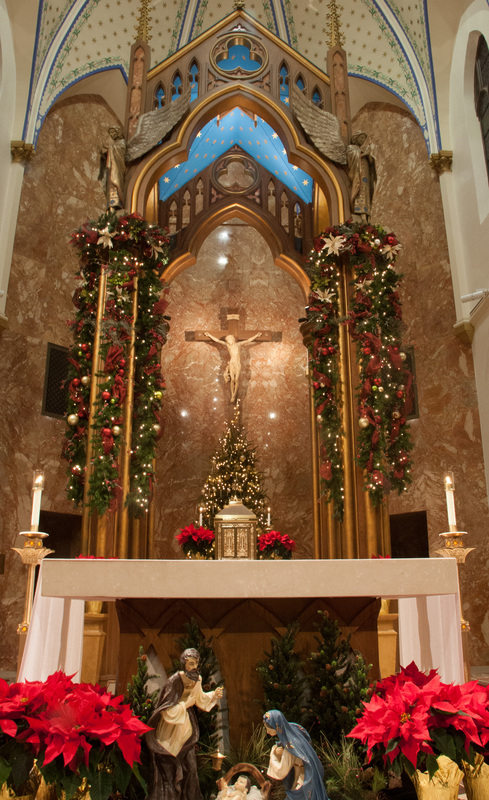
What is your favorite part of Christmas? Midnight Mass is a tradition in our family. I will admit that as I get older it seems midnight arrives later and later, but the beauty of the night still beckons and I continue the tradition. Walking into the church from the cold night air and seeing the sacred space adorned for this magnificent celebration brings a renewed sense of energy and vibrancy. The King of Glory is present in our midst.
As we prepare to celebrate the Fourth Sunday of Advent I realize that my Christmas greetings are a bit premature. However, I know the likelihood of finding time to write another post between now and Christmas is highly unlikely. Thus, I would rather be early than late with my prayerful good wishes to each of you.
I have appreciated sharing this blog space with you over the past year. I am humbled by the fact that there there have been days when the site received over 500 page views in a day. I never imagined it growing beyond a few parishioners from each of the parishes where I have previously served. I started my writing because of a few requests from people who appreciated my homilies when I worked in their respective parishes. It has now become a forum to dialogue with old friends and new, and it gives a place for me to process my thoughts (maybe in too public of a way at times).
Your e-mails regarding my postings have been thought-provoking and engaging. Even when you disagree with what I say we can have an enjoyable discussion. You have touched my life in a positive way by sharing this forum with me. It is always a privilege when we are provided with an opportunity to delve into the depths of our faith. I hope I have given you good food for thought from time to time throughout the year.
Merry Christmas to each of you! I hope and pray that the blessings of God enrich your life in a powerful way during these holy days.
-
Be Like A Postage Stamp
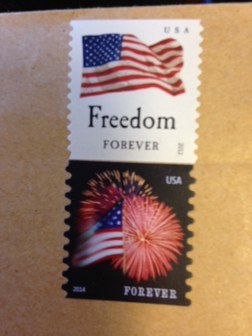
“Be like a postage stamp–stick to one thing until you get there.”
~Josh BillingsYears ago I enjoyed getting mail. A trip to the mailbox, especially around the holidays, was always a time of anticipation and expectation. Even when e-mail arrived on the scene I was excited to hear my computer say, “You’ve got mail.” Believe me, those days are long gone. Looking at the “in-box” each morning now can be a source of anxiety rather than a source of expectation.
The art of letter writing seems to be fading away and that is too bad. I have been profoundly touched by letters I have received through the years. I have also tried to bring that same kind of joy to others by letters I have written. In all honesty, I will admit that I do it too infrequently these days.
I remember a few years ago I attended the 25th wedding anniversary of a couple I had come to know through a cancer support group. At one point during the chemotherapy treatments (many years prior to this gathering) the individual was really going through a rough patch. I sent a note in the mail with a few words of encouragement. In my mind the letter contained nothing significantly profound, but 15 or more years later I was shown that letter at the anniversary party. It was profoundly meaningful to the person that received the letter during a very difficult time of life. We shared the memories of suffering, surviving, and ultimately, thriving. I read the letter I had written all those years ago; it still didn’t seem that magnificent to me. However, the person that received it read it from a completely different context.
I was reminded of all of this today when I saw a couple of interesting tidbits of historical information that occurred on December 11. In 1975 a first class postage stamp in the United States went from costing 10 cents to 13 cents. Ah! Wouldn’t we enjoy seeing those prices now? On December 11, 1961 the Marvelettes released the song, “Please Mr. Postman.” I am showing my age, but yes, I enjoyed hearing that song on the radio. Finally, I came across the quote from Josh Billings which I placed under the picture at the top of this article. That really made me think about my Advent journey.
As we prepare for Gaudete Sunday, are we seeking God with our whole heart, mind, soul, and strength? Are we pursuing sanctity with the kind of dedication Josh Billings is mentioning? “Be like a postage stamp–stick to one thing until you get there.” Are we pursuing sanctity with that kind of single-minded dedication? I hope so. Listen closely to this weekend’s second reading from Thessalonians and follow the simple guidance provided.
1. Rejoice always.
2. Pray without ceasing.
3. Give thanks.
4. Do not quench the Spirit.
5. Test everything.
6. Retain what is good.
7. Refrain from every kind of evil.Be like a postage stamp and stick to one thing until you get there. My recommendation is to stick with God.
“May the God of peace make you perfectly holy and may you entirely, spirit, soul, and body, be preserved blameless for the coming of our Lord Jesus Christ.” (1 Thessalonians 5:23)
-
Bishop Paul Etienne–Happy Anniversary!
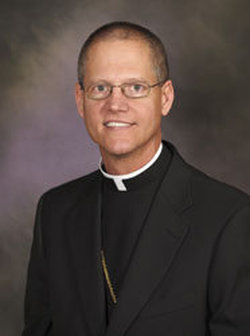
The day began early this morning, but it was well worth it. Bishop Paul Etienne was the celebrant at the 6:45 A.M. Eucharistic Liturgy at the Cathedral of St. Mary in Cheyenne. Today marks the fifth anniversary of Bishop Etienne’s ordination and installation as Bishop of the Diocese of Cheyenne. The weather was much more cooperative this year than it was five years ago, and the peace and serenity in the cathedral this morning was a very different environment as compared to the huge event at the Civic Center in 2009.
There was something profound about this morning’s celebration. The bishop’s homily was extremely personal and heartfelt. His words provided all of us with the opportunity to reflect upon our own relationship with the Good Shepherd. The grace of God was almost palpable in our midst, and it was a privilege to be present for this simple, but stirring, anniversary celebration.
I was hired as the Director of Pastoral Ministries for the Diocese of Cheyenne prior to Bishop Etienne being named the new bishop. I was hired by the Diocesan Administrator (in the absence of a bishop), and I arrived in Cheyenne about six weeks before Bishop Etienne. Accepting this position prior to a bishop being appointed created a little anxiety in my life. Who would the new bishop be? What would he be like? What would happen if he wanted to revamp everything—out with old and in with the new? (Even though I had just arrived I could be viewed as the “old.”)
As time passed and events unfolded I was grateful that the Holy Spirit had brought me to this place at this particular time. Working with Bishop Etienne during these five years has been a true blessing indeed. As I get a close-up view of the burden of responsibility that a bishop carries, I am more diligent in keeping all of the bishops in my prayers. I realize that criticisms are easy to thrust toward Church leadership, and some of that criticism has been rightly earned over the years. However, I also know that there are a lot of dedicated individuals doing their best to serve God and the church with great faithfulness and fidelity. Bishop Paul Etienne is one of those individuals.
Congratulations Bishop Etienne on your five year anniversary as the Bishop of the Diocese of Cheyenne. Your ministry in the diocese is truly appreciated. This day I offer prayers of gratitude and supplication for you, your family, and all of the people under your care. May the grace of our Lord, Jesus Christ, the love of God the Father, and the communion of the Holy Spirit be with you!
See Bishop Etienne’s own reflection for today at his blog:
http://bishopsblog.dioceseofcheyenne.org/ -
Running At Full Throttle
Advent is into the second week. How are you doing?
My calendar has been full lately. (Thus, the infrequency of blog postings.) I have been making a conscious effort to stay focused on the season in the midst of the hectic pace. However, determining whether or not I have been successful is a subjective evaluation. Some days would probably score better than some other days.
On Friday I led a simple gathering of a dozen folks in an hour of reflection. It was an amazing experience. I had contacted everyone in the group a few days prior to the gathering and asked each person to think of a “WOW” moment in their lives. We used those examples to move into a deeper look at how God works in our lives on a continual basis. There was no doubt that the power of the Holy Spirit was moving in our midst as we shared our thoughts, struggles, hurts, and joys. These intimate gatherings allow for a profound experience of the presence of God, and I am grateful for having been a part of this particular gathering.
On Friday evening I traveled to Casper, Wyoming to present a day-long retreat on Saturday and preach at all of the weekend Masses at St. Anthony’s Parish. These opportunities to visit a parish community are always exciting. I enjoy meeting the people and appreciate the privilege of sharing the journey of faith with them. Although I am the one doing the presenting, I always walk away enriched in the process. It is a fantastic experience to learn of the many ways people have been touched by the love of God.
I was reminded by the beginning of Mark’s Gospel this weekend to look at my faith journey with a sense of urgency. God is calling me to holiness today–not tomorrow, not next week, not next month–TODAY! Mark chose to start his Gospel with Jesus being in adulthood. He wasted no time with the infancy narrative or the early years. The difference in his approach as compared to the other Gospel writers really struck me this year. I don’t know if that is the message he was intending to communicate by starting his Gospel in that manner, but it is the message I took home with me this weekend. It was something I need to ponder.
John the Baptist struck me in a somewhat different manner this time too. As I proclaimed the Gospel at mass I was overwhelmed at the humility of John. People were coming to him from all over the Judean countryside as well as Jerusalem to be baptized. He was popular. Some thought he was the messiah. He did not bask in this attention; he simply pointed people toward Christ and the coming of the Kingdom.
Are we pointing people to Christ in the way we speak and the way we act?
-
Advent–A Time For Serious Reflection

The waters of baptism have brought each one of us new life. The Sacred Chrism has sealed us with the gifts of the Holy Spirit. How have we been changed through these experiences? Are we truly preparing the way of the Lord?
This Sunday (the 2nd Sunday of Advent) we hear the beginning of Mark’s Gospel. The first line of the Gospel isn’t even a sentence; it does not contain a verb. The line stands more as a title than anything else: “The beginning of the Gospel of Jesus Christ the Son of God.” There is no infancy narrative in Mark’s Gospel. He simply jumps into the story at the time of John the Baptist. This directness cuts to the chase and reminds us of the necessity of repentance.
John the Baptist is an excellent example for Christians. He was fueled with a burning passion to point others to Christ. He admits that he is not even worthy to stoop and loosen the thongs of his sandals. The humility expressed by John the Baptist is refreshing, and he certainly challenges me to look at my own life. Am I pointing others toward Christ with that same kind of humility?
How will you prepare the way of the Lord during this Advent season?